Scratch vs Codestronauts: what comes after Scratch for your 8–12-year-old?
Scratch hands a kid an open stage. Codestronauts hands them a story to finish.
Short answer
Scratch is a free,[1] block-based platform for ages 8 to 16.[2]
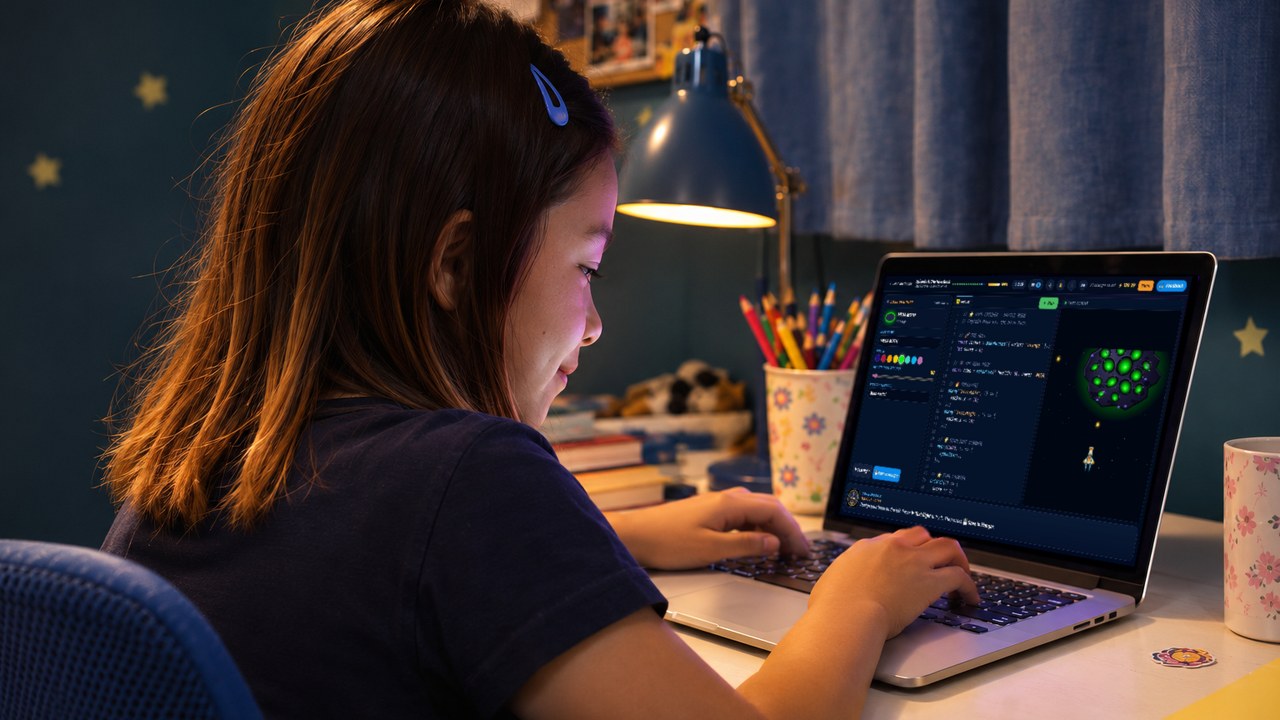
 Codestronauts is a self-paced, story-driven coding course for kids 8–12. Kids wake a robot named Cody, then type JavaScript to build games.
Scratch makes a great first step. When your kid wants to type code, Codestronauts can be next. Episode 1 is free, no card.

No card needed. Episode 1, “Wake Up, Cody,” takes about 15 minutes.
At a glance
| Codestronauts | Scratch | |
|---|---|---|
| What it is | Story-driven coding course. Star Catcher, its first mission, has five episodes | Free block-based platform and community[3] |
| Price | Episode 1 free, then $29.99 once for the rest of Star Catcher | Free. Paid for by supporters[1] |
| What the kid types | Real JavaScript, line by line | Blocks, dragged and snapped together, with no syntax to type[3] |
| Ages | 8–12 | 8 to 16, with ScratchJr for 5 to 7[2] |
| Best for | Kids 8–12 ready to type code, with a story to finish | Making their own stories, games and animations in blocks[2] |
| What comes next | A story to finish. Cody needs them, and episodes end on cliffhangers | Their own ideas: stories, games and animations they invent[2] |
| What they make | Their own arcade game, with levels, sound, a score and a boss | Open-ended projects. Anything shared can be remixed by others[4] |
| Help when stuck | Cody's hints first. Her last says the line, and they type it | Tutorials and forums, where other Scratchers answer[5] |
| Where it runs | Phones, laptops and computers, in a web browser. Nothing to install | Browser or offline app.[6] Most phones play projects but can't make them[7] |
| Who's in charge | The parent, behind a PIN. No ads or chat with strangers | Open, moderated community. No parental setting stops a kid sharing or commenting[6] |
| Who makes it | Jonathan Greene, a dad of two with 17+ years in software | The Scratch Foundation, a nonprofit. Began at the MIT Media Lab, 2007[3] |
No card needed
Checked Nov 5, 2026. Every fact about Scratch carries its source, listed under Sources.
The map
Blocks in Scratch, then typed code with a co-pilot
Codestronauts has kids type real code, with Cody's hints when they're stuck. Scratch has them drag blocks, with tutorials and forums for help.
Placed from each program's own pages, checked Nov 5, 2026.
| Real coding skill | |||
|---|---|---|---|
| Help when they're stuck | Learns the ideas in blocks | Moves from blocks to typing | Types real code, like the pros |
| A co-pilot: hints, then the line |  Codestronauts | ||
| Hints, guides or a teacher at set times | codeSpark | Code.org Tynker Kodable Minecraft Education | CodeCombat Roblox Studio Khan Academy CodeMonkey |
| Tutorials and forums | Scratch | ||
- → Real code from day one: no wall when the blocks run out.
- ↑ A stuck moment becomes a lesson, not a reason to quit.
My kid loves Scratch. Should we switch?
No need to switch. Keep Scratch and add Episode 1.
The big ideas carry over. A Scratch kid has likely met loops, events and variables.
Run it here
The same idea, spelled out
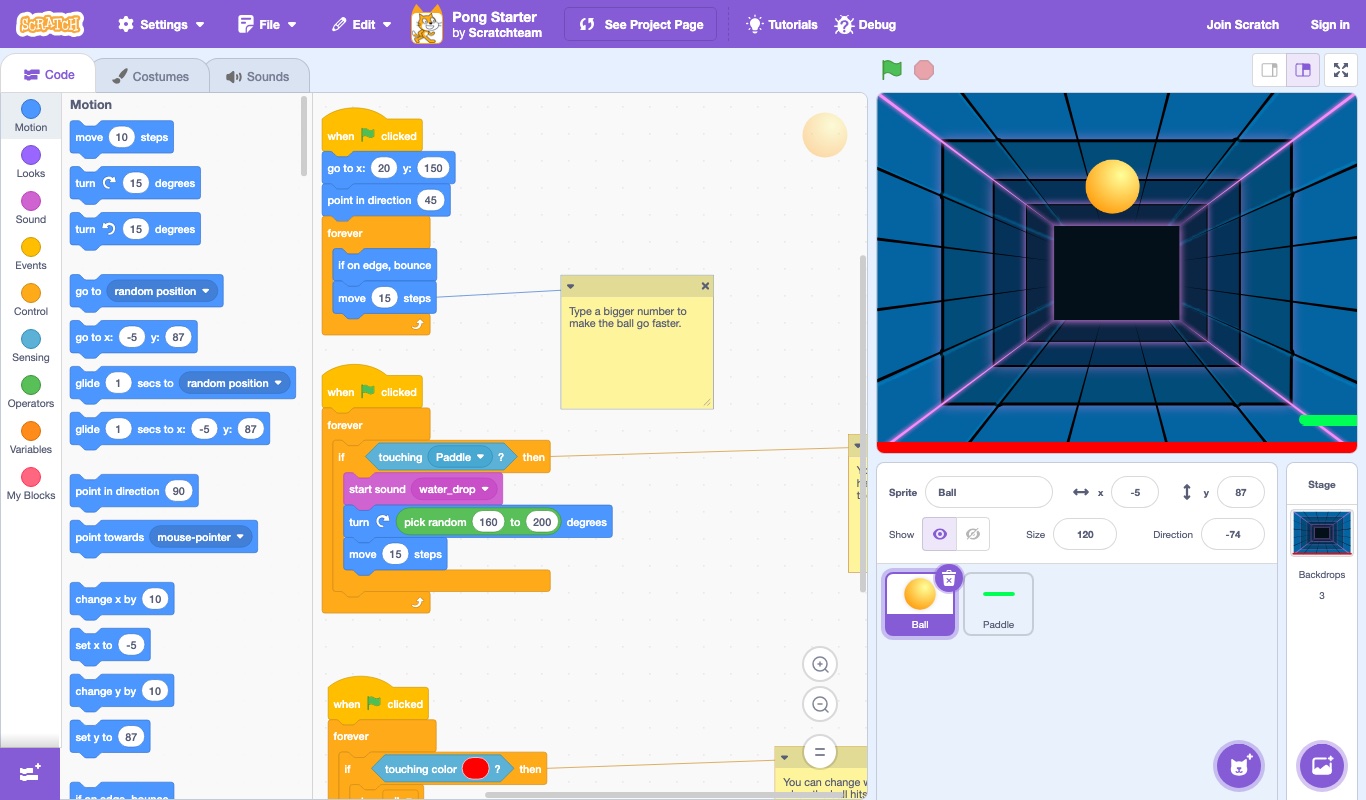
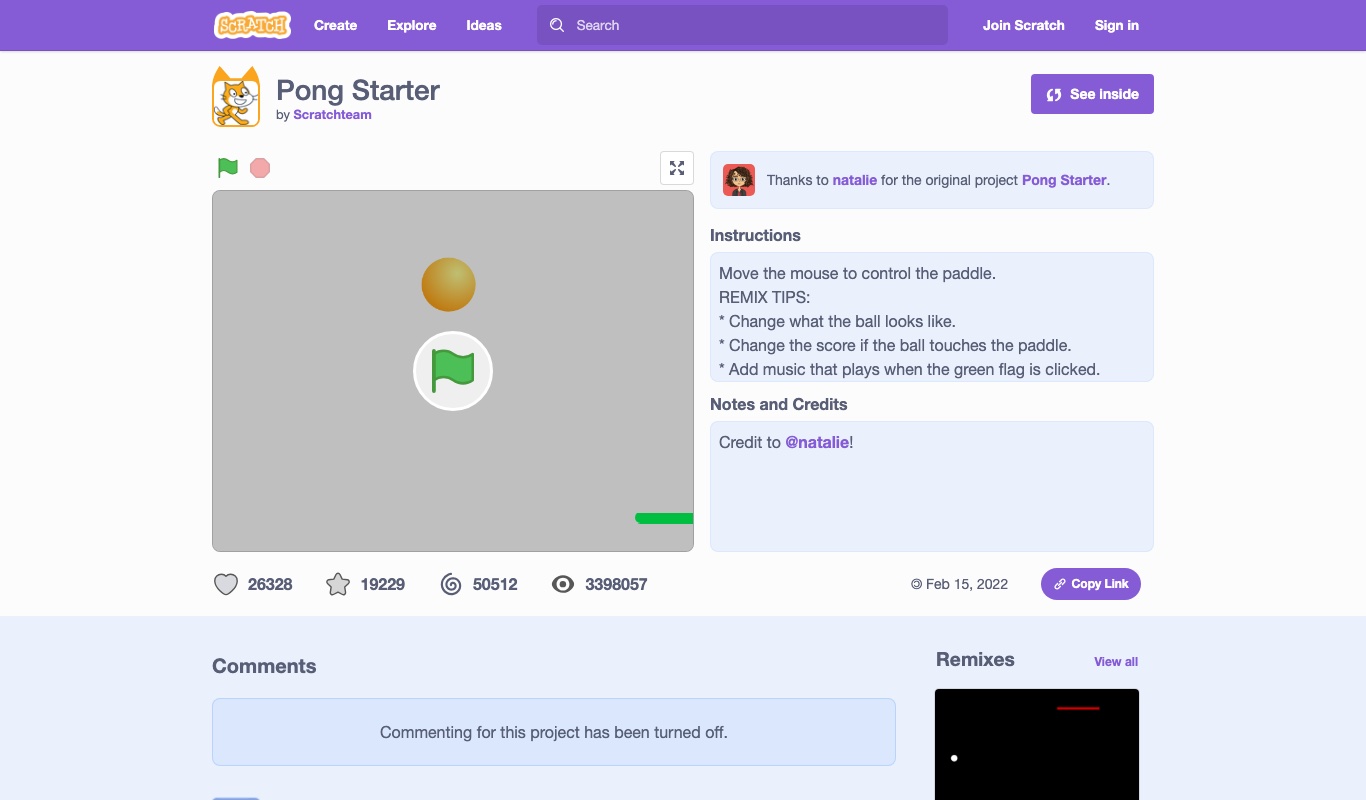
In the Scratch Team's Pong Starter, a forever block keeps the ball moving, and a note says to type a bigger number.Screenshot of a project in the Scratch editor, scratch.mit.edu, taken Nov 2, 2026. Licensed CC BY-SA (https://creativecommons.org/licenses/by-sa/). Scratch is a project of the Scratch Foundation. It is available for free at https://scratch.mit.edu
// 🚀 THE HULL
makeRocket({ color: "blue" });

// 🌟 STARLIGHT SCANNER
every(1000, () => {
  spawnStar();
});
Change blue to red, or 1000 to 100, and press Run.
Press ▶ Run
That's Episode 1's real game engine, running your edit on this page.
No card needed. Episode 1, “Wake Up, Cody,” takes about 15 minutes.
Three signs your kid is ready to type:
- They open other people's projects just to look at the blocks.
- They ask how "real" games get made.
- They ask what a block would look like as code.
Parents also weigh CodeCombat and Code.org as typed next steps.
What's the first evening like in each?
Scratch starts with a cat to move. Star Catcher starts with a robot to wake.
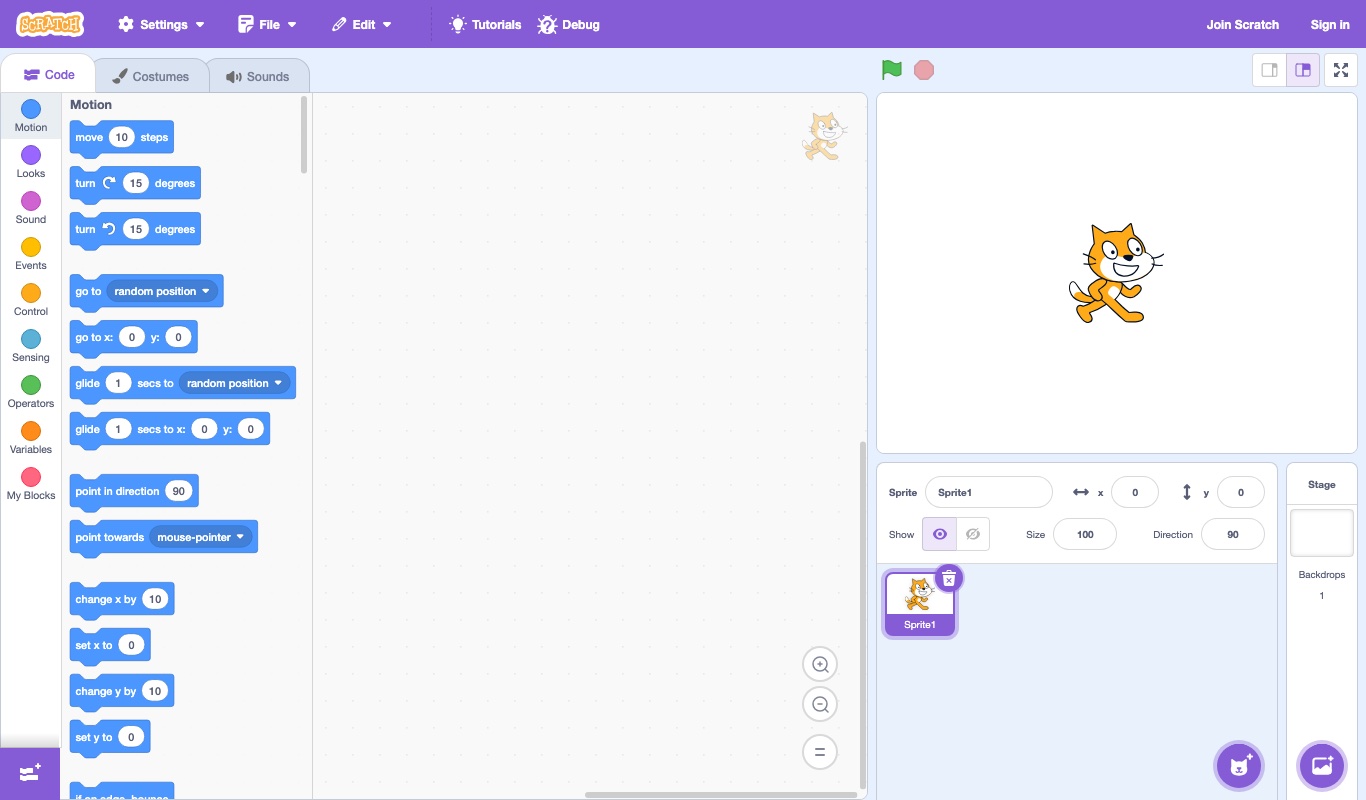
Scratch's editor opens on a white stage, the orange cat and a column of blue Motion blocks. Drag move 10 steps into the middle, click it, and the cat slides forward. From there, a kid follows the built-in Tutorials[5] or chases their own idea.
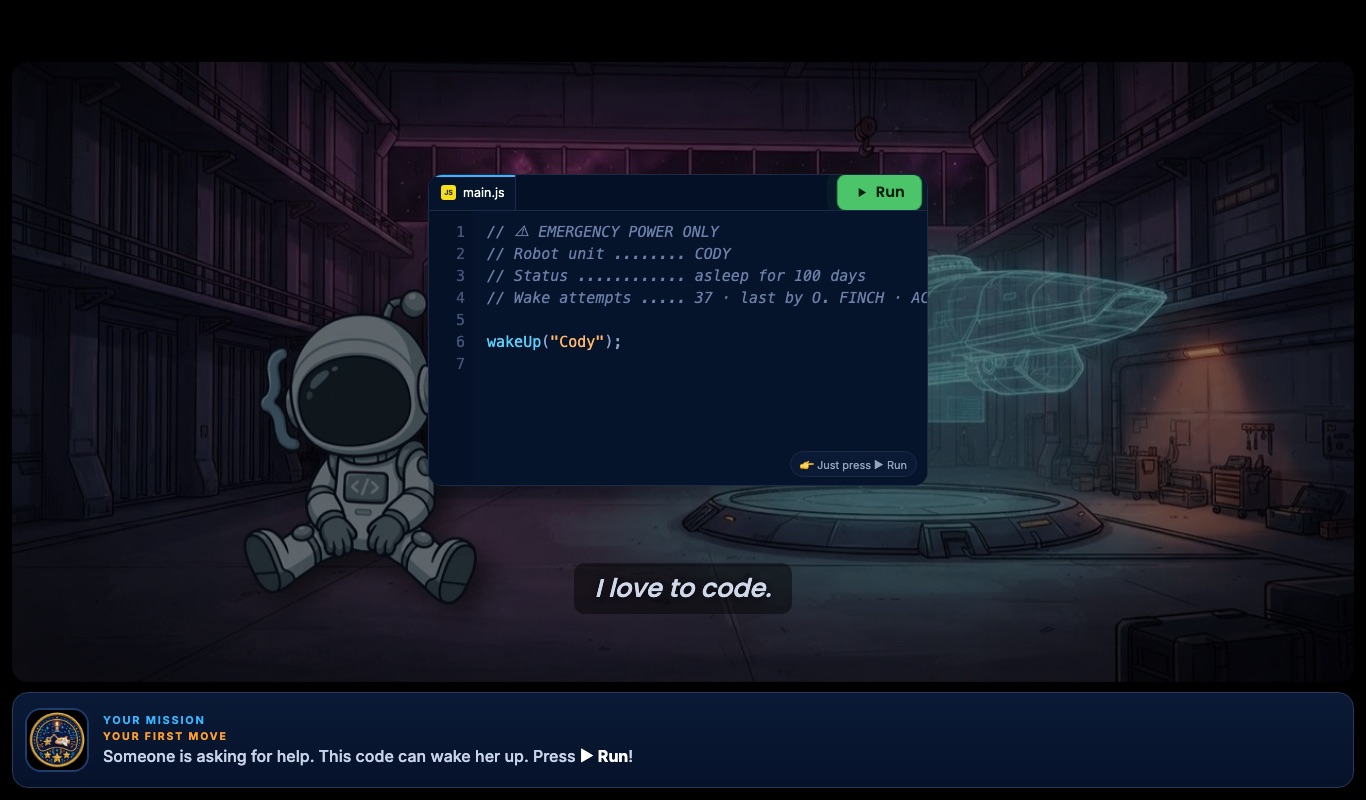
Episode 1, Wake Up, Cody, takes about 15 minutes. A short film carries a call for help to a dark hangar. A line of code is already waiting, and pressing Run wakes Cody. Then your kid types their first line, and it builds the ship.
To start: your email, a password, a PIN and your kid's first name. Click the link we send, then hand over the screen, sound on. You need no card, and your kid needs no email.
Sit beside your kid for this first episode. Ask them what each line did.
Is Scratch good for kids?
Yes, for a kid with an idea and the urge to share it. They can turn it into a story, a game or an animation and show it to the world.[2] The Scratch Foundation says 200 million kids create on it.[3] Scratch says making and sharing teaches kids to think creatively, reason systematically and work collaboratively.[2]
Every shared project can be remixed.[4] A kid who loves a game can open it, read the blocks and make their own version.[4]
Block coding vs text coding: what changes?
The ideas stay, and the spelling starts to count. Outside classrooms, text-based languages are still the main way people program.[8]
Kids can try harder for a character than for themselves. In a Stanford study of 8th-graders learning biology, students who believed they were teaching their own computer character spent more time on learning and learned more.[9] Cody needs your kid to rebuild the ship.
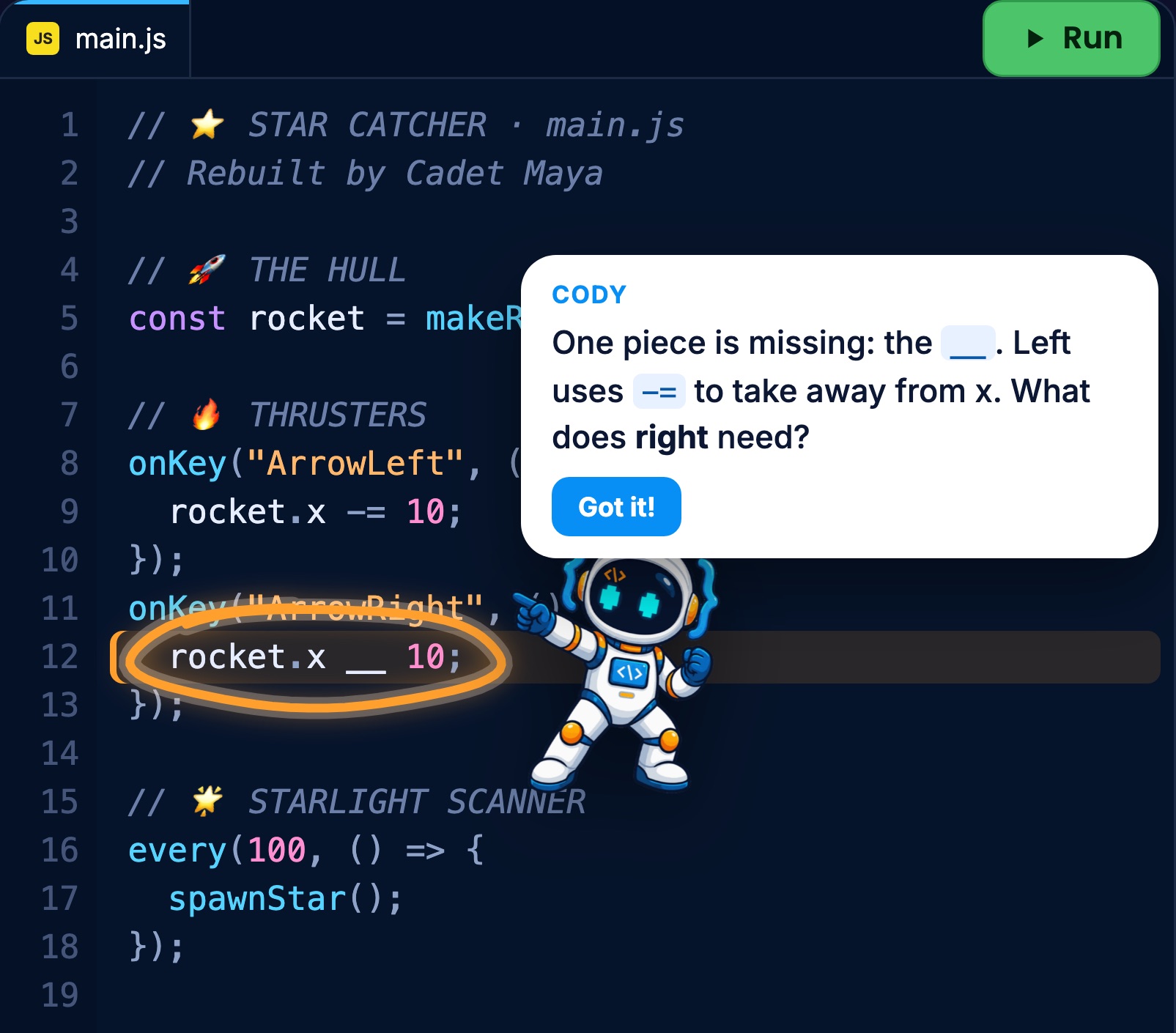
Here's a real typo from Episode 1. Your kid types makerocket(); with a small r. Cody says, "Hmm, the computer doesn't know that word. Check the spelling: makeRocket, with a capital R!" Still stuck? Her hints, in order.
- "Every letter counts. Small m, capital R: makeRocket."
- "Don't forget the round brackets () and the semicolon ; at the end."
- "Type exactly this, then press Run:
makeRocket();"
They type it, and the ship appears. Later, a wrong line runs on the viewscreen, often for a laugh, and Cody says why.
Is Scratch free? Then why pay for Star Catcher?
Scratch is free, and its supporters pay for it.[1] One payment of $29.99 buys the story, a voiced Cody and a guided path to a finished game, about two hours in all.
Star Catcher's first episode is free too. When your kid wants Episode 2, they come and ask you. That payment opens the other four episodes. Nothing renews, and brothers and sisters share it.
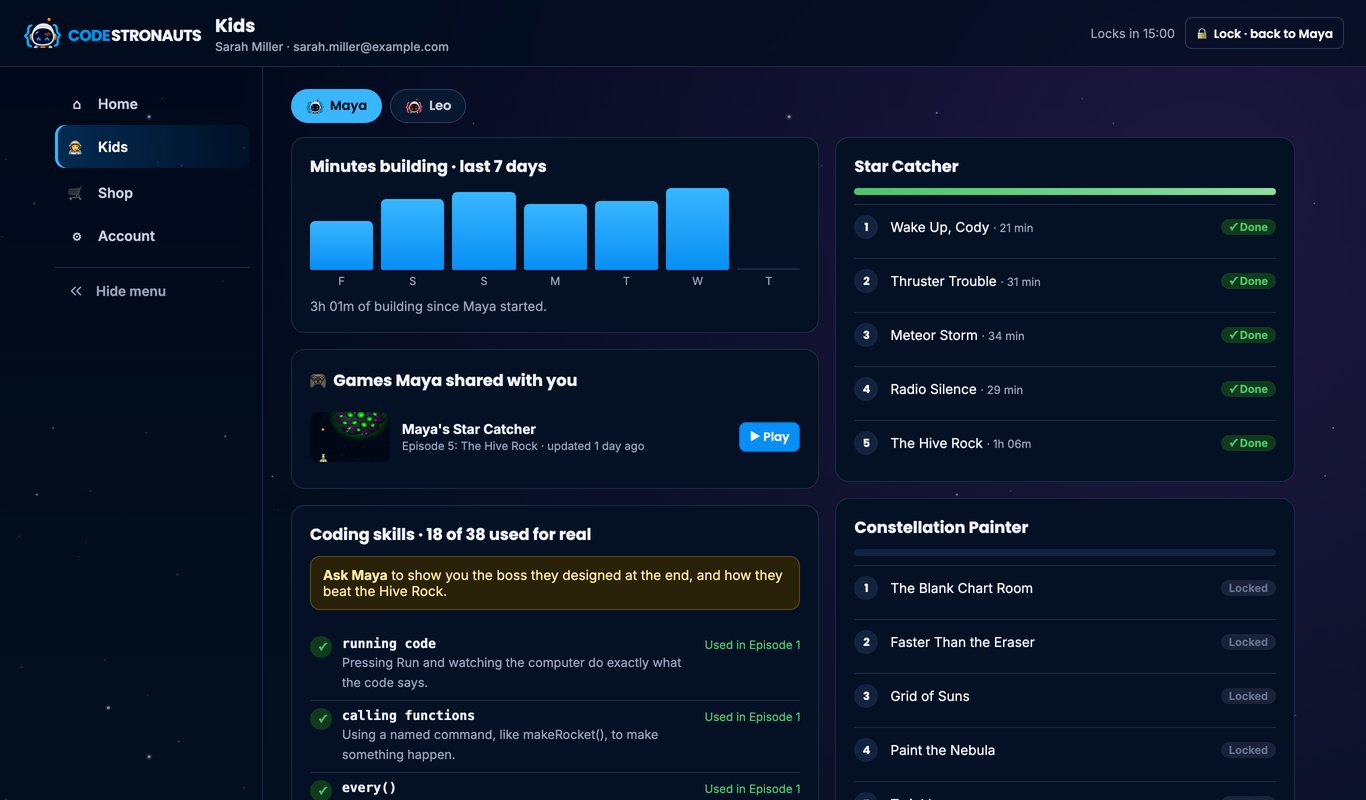
You stay in charge. The Parent Corner sits behind your PIN, and nothing is bought without your OK. It shows the minutes spent building, the games your kid shares with you and each episode done.
Questions parents ask
What language should my kid learn after Scratch?
Python is the usual answer, and a good one. For a kid who wants to build games, we'd pick JavaScript, because those games open in any web browser. In Stack Overflow's 2025 survey, 66% of respondents had done extensive work in it over the past year.[10] The ideas carry over to Python later.
Is Scratch real coding?
Yes. A forever block is a real loop, and blocks are common in computer science education.[8] The next skill is typing those ideas out.
Does my kid need Scratch first?
No. Scratch is a great first step, never a requirement. Cody explains each new word right after your kid sees it work. A brand-new coder starts from the same first line as a Scratch kid.
Is Scratch safe for 9 year olds?
Scratch is built for ages 8 to 16[2] and moderated, with an automated filter and a team that reviews reports.[6] It's open, so others can comment on your kid's projects. Scratch's help pages suggest a new unconfirmed account, which can't share or comment, turning off comments or using the offline app.[6]
Is it real JavaScript?
Yes. Your kid types JavaScript, and the web browser runs it. Game commands like makeRocket() are functions written for the story, so a first line can build a ship.
Where Codestronauts fits
For the Scratch kid who's ready to type
Codestronauts' first mission, Star Catcher, runs five episodes. Your kid wakes Cody, rebuilds a starship with her and sets out to relight the Great Beacon. By The Hive Rock, they've built an arcade game with a boss of their own design.
Constellation Painter, Mission 2, comes after.
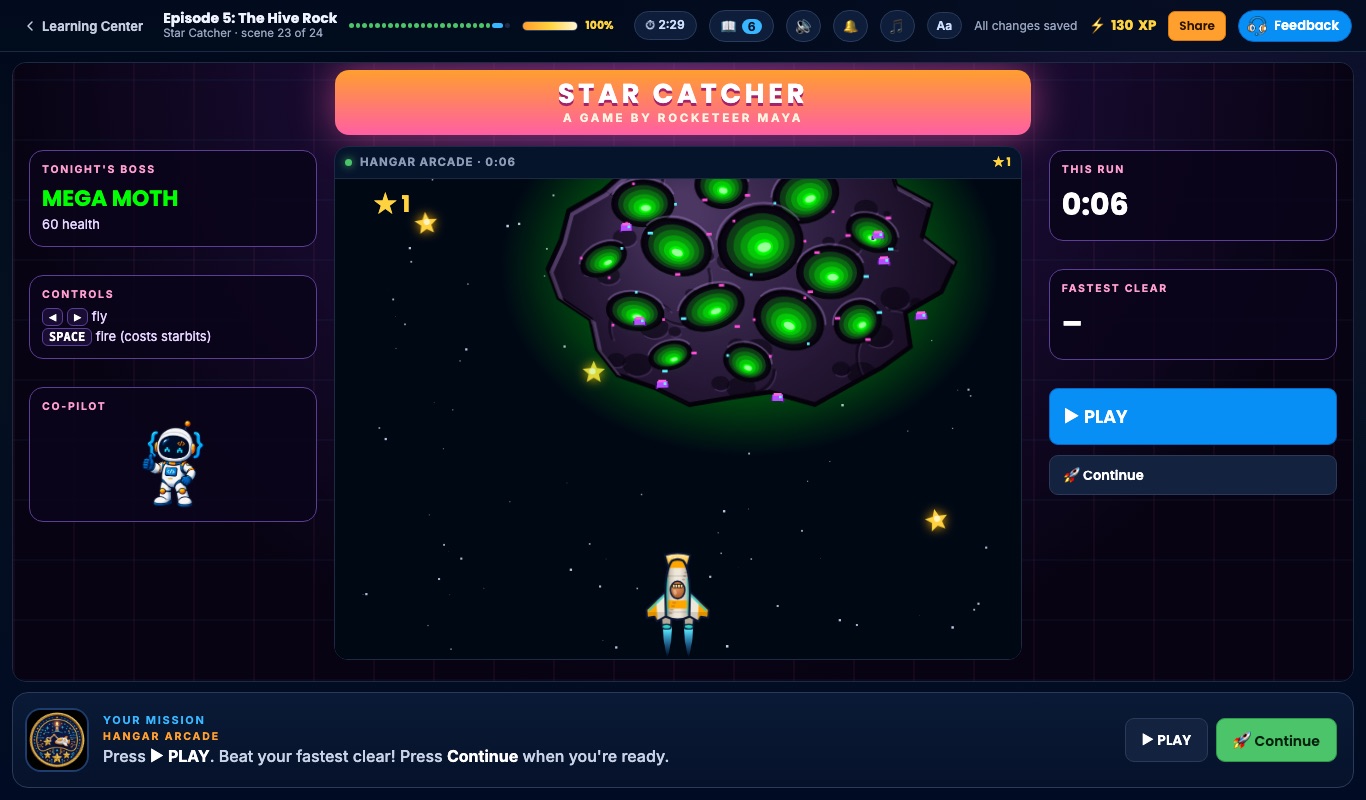
Every Codestronaut starts here, with one press of Run. No card needed.
Was this answer helpful?
What was missing?
Scratch alternatives parents also weigh
Code.org Tynker CodeCombat Roblox Studio Coding tutor Coding camps Live coding classes Khan Academy CodeMonkey Kodable codeSpark Minecraft EducationAll fourteen side by side
From the blog
All answers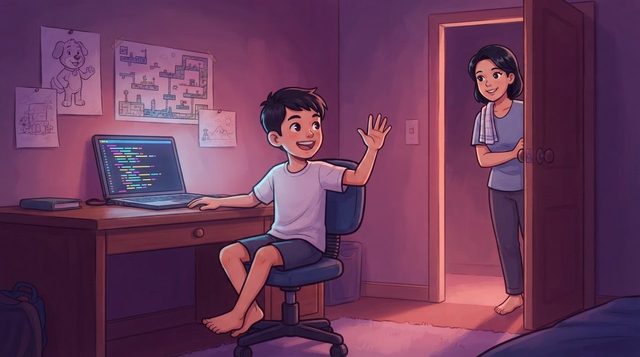 CodingMy 10-year-old has outgrown Scratch. What should he learn next?Typed code, in a tool that keeps giving him things to show. Python is the usual answer, and a good one. For a ten-year-old game builder we'd pick JavaScript, because his games open in any web browser.
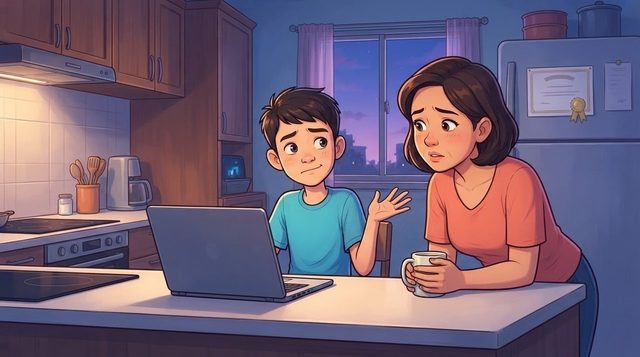 Coding“My son can tell me what he clicked in coding class, but not why. I can't tell if he's learning anything.”Ask him to explain one line he wrote: what it does, and why it's there. If he can, he's learning. If he can only retrace the clicks, he's following steps.
How we compared
We make Codestronauts. We opened each product and took these screens on the dates shown. Each fact about the other program links to its own pages. Something out of date? Write to hello@codestronauts.com and we'll fix it. Scratch belongs to its owner, which has no tie to Codestronauts.
Sources
- How much does Scratch cost? Do I need a license?, Scratch Help Center (Scratch Foundation). Read Nov 5, 2026 ↩
- What is Scratch, and what can I do with it?, Scratch Help Center (Scratch Foundation). Read Nov 5, 2026 ↩
- Scratch | Scratch Foundation, Scratch Foundation. Read Nov 5, 2026 ↩
- Remixing: what is it and why can every project on Scratch be remixed?, Scratch Help Center (Scratch Foundation). Read Nov 5, 2026 ↩
- I need help making a project., Scratch Help Center (Scratch Foundation). Read Nov 5, 2026 ↩
- How do I limit the interactions my child has with other Scratchers?, Scratch Help Center (Scratch Foundation). Read Nov 5, 2026 ↩
- Can I use Scratch on my phone or tablet?, Scratch Help Center (Scratch Foundation). Read Nov 5, 2026 ↩
- Switch Mode: Scaffold Learners from Block-Based Programming to Text-Based Programming (Lin, University of Maryland), Doctoral dissertation, University of Maryland, 2024, indexed by ERIC. Read Nov 5, 2026 ↩
- Teachable Agents and the Protégé Effect: Increasing the Effort Towards Learning (Journal of Science Education and Technology, 2009), Stanford Graduate School of Education (Chase, Chin, Oppezzo and Schwartz). Read Nov 5, 2026 ↩
- 2025 Stack Overflow Developer Survey: Technology, Stack Overflow. Read Nov 5, 2026 ↩
- Computer Science for Students | Learn, Explore, and Create with CodeAI, CodeAI (formerly Code.org). Read Nov 5, 2026
- Coding For Kids, Kids Online Coding Classes & Games | Tynker, Tynker. Read Nov 5, 2026
- About CodeCombat, CodeCombat. Read Nov 5, 2026
- Luau, Roblox Creator Hub. Read Nov 5, 2026
- Introducing Khan Academy's New Intro to Computer Science Course with Python, Khan Academy Blog. Read Nov 5, 2026
- Coding for Kids | Game-Based Programming, CodeMonkey. Read Nov 5, 2026
- Coding & Typing Apps for Kids Ages 4-10 | Kodable, Kodable. Read Nov 5, 2026
- codeSpark, the #1 Learn-to-Code App for Kids 3-10, Begin (codeSpark). Read Nov 5, 2026
- Computer Science | Minecraft Education, Minecraft Education (Mojang and Microsoft). Read Nov 5, 2026