How many extracurricular activities should a child do?
Short answer
For a child of 8 to 12, one to three activities is plenty, and we'd keep two afternoons a week free.
Packed calendars are rarer than the group chat makes them look: the Census Bureau found 9% of school-age children did a sport, lessons and a club.1
One activity your child chooses and finishes beats five they're driven to.

Why does it feel like every other kid is doing more than mine?
Because you mostly see the highlights. It's Sunday night and the class group chat is busy. One mom posts a robotics medal. Another mentions her son just moved up a level in Kumon. Someone's 9-year-old has started Mandarin, on top of swim and piano. Your child has soccer on Saturday mornings and spent this afternoon on the couch with YouTube.
So you open a new tab and start pricing another class. I feel like we're behind is a thought plenty of parents of kids this age have had, usually late at night, usually after scrolling through other families' weeks. A second thought follows close behind it: if we don't add something now, our kid will spend the years when learning comes easiest on the couch.
How many activities do most kids actually do?
Fewer than the group chat suggests. In the Census Bureau's report A Child's Day, 42% of school-age children played sports, 30% took lessons and 28% were in clubs, and only 9% did all three.1 The week that makes you feel behind belongs to a small minority.
The same report found that kids in even one activity tend to be more engaged at school than kids in none.1 The benefit starts at one. For a ceiling, counselor Stephanie Wijkstrom's guidance for families is plain: children shouldn't have activities every day of the week, and many agree three is a good maximum.2 Our own rule of thumb at this age is one or two, with at least two afternoons a week that belong to your child. Beyond that, look inside each activity: whether your child chose it, enjoys it and is getting somewhere with it decides whether it helps.
Can too many activities hurt my child?
They can, though usually not the way parents fear. Psychologist Suniya Luthar of Columbia's Teachers College and her colleagues put the overscheduling worry to the test with eighth graders in affluent suburbs, where calendars run full. Heavy schedules on their own did little harm. What tracked with kids' distress was feeling criticized by their parents, along with having no grown-up around after school.3 The busy kids in that study generally enjoyed their activities, didn't feel pushed into them and were doing well.3
So the cost of a crowded week is what can ride along with it: a child who learns that every afternoon is a performance someone is grading, who stops choosing anything for themselves, and who loses sleep to the drive home. These are the signs a week has tipped too far:
- tired all the time, or asleep in the car most evenings
- stomachaches or headaches before one particular class
- homework slipping because there's no time left for it
- dread on the way there, relief when it's cancelled
- no afternoon left with nothing in it
Every one of those is fixable, often within a weekend, because a calendar is the easiest thing in your house to rewrite.
Should I add the class everyone else takes, or cut everything?
Neither, as a rule, and each misfires in its own way. Adding the class the group chat is talking about buys you a few weeks of calm and gives your child one more thing to get through. They didn't pick it, so they do what it takes to get back in the car. Clearing the whole calendar to protect them swings the other way: the freed afternoons fill up with YouTube, and the worry is back by the next sign-up form. Sampling a new class every term to keep their options open looks like breadth on paper, yet nothing gets past the beginner stage, so they never find out what being good at something feels like.
What works is fewer things, chosen by your child, each with an end they can reach. A meta-analysis of 41 studies found that giving people a choice raised their intrinsic motivation, effort, performance and sense of competence, and the boost to motivation was stronger for children than for adults.4 Pair that choice with a finish line they can see from the first day, a belt, a show, a thing they built, and the activity turns into something they're in the middle of, instead of a slot on the fridge calendar.
How do I decide which activities to keep?
Do this with the real calendar in front of you. It takes an evening and costs nothing.
- Write the whole week on one page. School, every class, the drives, homework, dinner and bedtime. Count the afternoons with nothing booked. Fewer than two means the week is too full, however busy other families look.
- Protect sleep first. Count back from the time your child wakes up: kids this age need about 9 to 12 hours a night.5 A class that pushes bedtime past that is the first one to move.
- Ask why, one activity at a time. Luthar's team asked kids whether they did each activity because it was fun, because it was good for their future, or because adults wanted them to.3 Ask your child the same three, on a calm evening rather than after practice. Keep what comes back "fun". Look hard at anything that only comes back "because you want me to".
- Let your child pick the anchor. Offer a short menu of options you can really support and let them choose one to go deep on. The one they chose is the one they'll put effort into.
- Settle on its natural end before it starts: a term, a belt test, a recital, a finished project. Decide about next term when that end arrives, not on a bad Tuesday.
- Drop one before adding one. If your child is at three and asks for a fourth, something comes off first, the rule Wijkstrom gives families too.2
- Keep one thing nobody scores. Free play, a bike, a sketchbook. Guard family time each day that isn't logistics, at least 20 minutes of a game, a talk or drawing together,2 and talk about anything except tomorrow's schedule. Let your child see you take unscheduled time too: a book on the couch, an evening with nothing planned.
- After practice, ask what was fun before you ask how it went. Leave the coaching to the coach.
What does a better week look like?
Here's one way it can go, as an example. A fourth grader has something booked four afternoons a week: math enrichment, swim, a robotics club and Saturday Mandarin. Most Tuesdays he falls asleep in the car. His parents write the week on one page and ask him the three questions. Swim comes back "fun". Robotics comes back "fun, but we never finish anything". The other two come back "because you want me to".
They keep swim. Math moves to a lighter weekend slot and Mandarin pauses until the holidays. Then they hand him a short menu for the rest of the week: stay with the robotics club, or start the thing he's been asking about for a year, making his own video game. He thinks it over and picks the game, and decides for himself to finish the club's term and stop there, because the game is something he gets to finish. This time the project has an end he can see. A few weeks in, he's the one asking for time on it, and his parents say yes without the usual screen guilt, because what he's doing on the screen is building.
Where does Codestronauts fit in a week like this?
If your child's pick is making games, or their free afternoons drift to screens anyway, Codestronauts can be that one chosen thing. Star Catcher, the first mission, made for children between 8 and 12, adds no drive and no fixed class time. It plays in a web browser at home, in five episodes of 15 to 40 minutes, roughly two hours from the first line to the last boss, at your child's pace.
The story does the pushing so you don't have to. In the first episode, Wake Up, Cody, your child presses Run and a nervous robot named Cody comes to life. From then on she needs them to rebuild the Star Catcher and relight the Great Beacon. Every line they type, in real JavaScript rather than drag-and-drop blocks, moves the adventure forward, and every episode stops on a cliffhanger that makes the next one hard to wait for. By the end, they've built a working arcade game of their own, steered with the arrow keys, racking up points over several levels, with sound, and a final boss your child invents. A mistake shows up right there on the viewscreen, sometimes hilariously, and Cody talks them through why, pointing at the line with a hint rather than the fix.
You hold the keys in the Parent Corner, behind a PIN only you know, where every step and sign-in shows. There are no ads and no chatting with strangers. The whole mission is one payment of $29.99, shared by siblings, with nothing to renew.
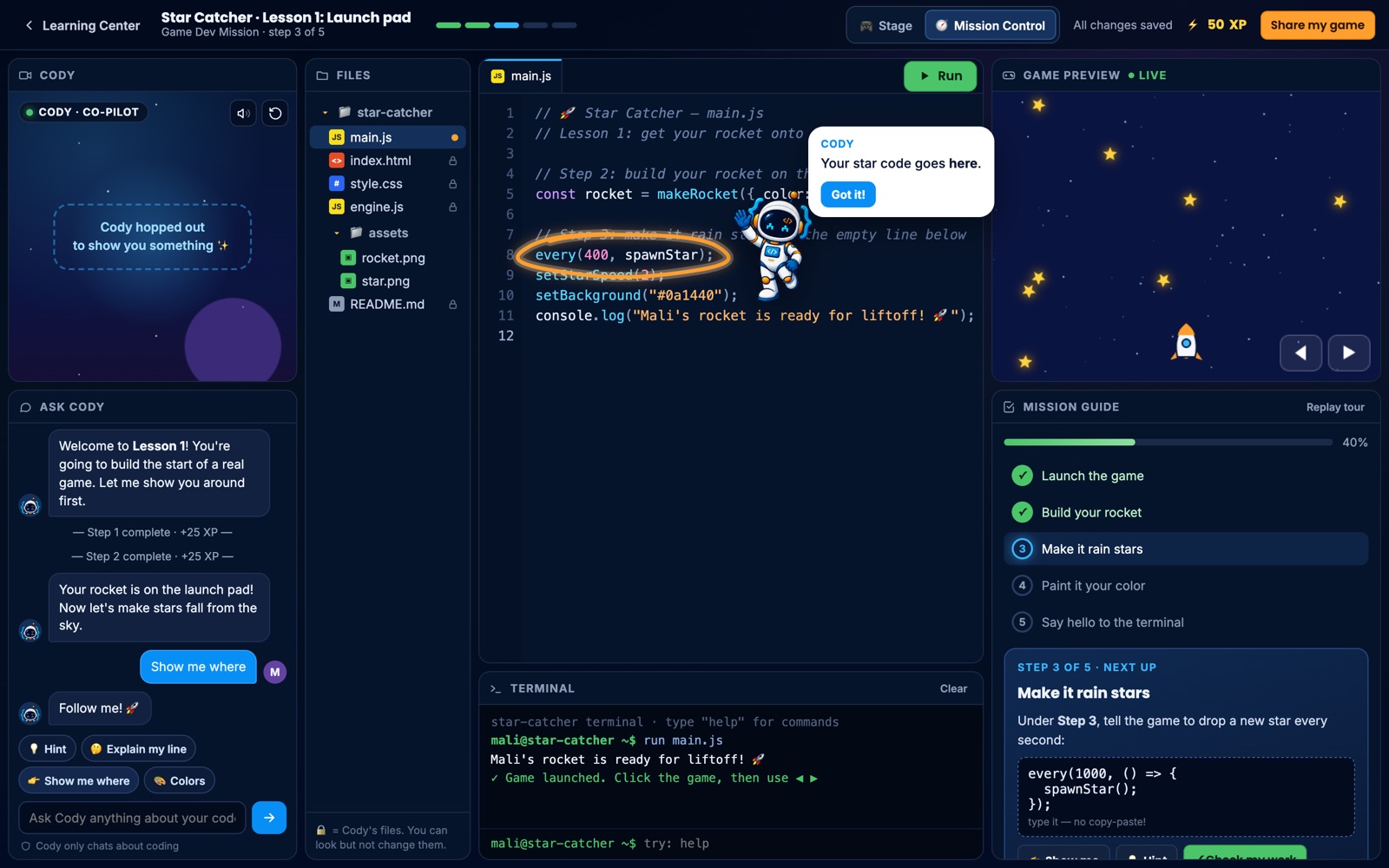
See the mission your child could choose as their one thing, and the game they would finish.
See how Star Catcher worksQuestions parents also ask
Is one extracurricular activity enough for a child?
Yes, for many kids one is the right number. The Census Bureau's data show the gap between some and none: 42% of children who took lessons were highly engaged at school, against 33% of those who didn't.1 One activity your child cares about puts them on the right side of that gap and leaves the free time a fuller week would eat.
Should my child do one sport and one creative activity?
It's a good pair if your child wants both. Kids this age should get at least 60 minutes of physical activity a day,5 and that can come from a team, a bike or the playground. The creative side can be music, art or building things. Two activities, chosen and enjoyed, still leave room for free afternoons.
What if my child wants to do everything?
Let them sample in short blocks, like a holiday camp or a few weeks of a taster class, and keep the weekly schedule to three at most. Use the drop-one-to-add-one rule and protect bedtime. Eagerness is a great problem to have. Your job is pacing it so they get far enough into one thing to feel good at it.
Will fewer activities hold my child back later?
Nobody will ever read a fourth grader's schedule. What carries into middle school is a kid who knows their own interests and has felt what it's like to get good at something. One activity taken deep builds that. Five taken shallow, each chosen by someone else, rarely do.
Was this answer helpful?
What was missing?
Sources
- Children's Extracurricular Activities: A Child's Day, U.S. Census Bureau ↩
- How many extracurricular activities are too many? These 8 ideas can help you find the answer., Kidsburgh (Stephanie Wijkstrom, founder of the Counseling and Wellness Center of Pittsburgh) ↩
- Extracurricular Involvement Among Affluent Youth: A Scapegoat for "Ubiquitous Achievement Pressures"? (Developmental Psychology, 2006), Luthar, Shoum and Brown (Teachers College, Columbia University; Yale University), via PubMed Central ↩
- The Effects of Choice on Intrinsic Motivation and Related Outcomes: A Meta-Analysis of Research Findings (Psychological Bulletin, 2008), Patall, Cooper and Robinson, via Scholars@Duke ↩
- Your Child's Checkup: 10 Years, Nemours KidsHealth ↩
Keep reading
All answers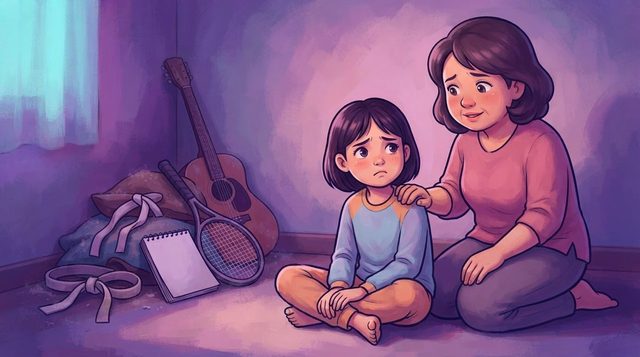 MotivationMy child quits everything. How do I help them stick with something?Your child is in good company. The average kid quits a sport by age 11, most often because it stopped being fun.
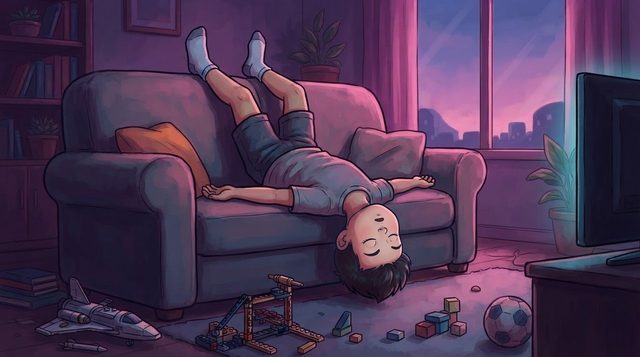 MotivationMy 9-year-old is always bored. What should I do?A 9-year-old who is always bored usually has too little in the day that fits their level or matters to them. It's worth catching now.
 School“We live in Bangkok, and I want my child ready to compete with kids from every country.”Give them a few things that count in any country: English they use for real, a belief that effort pays, and a skill judged the same everywhere, like code.
 Screens“My 10-year-old wants TikTok because all her friends have it.”Not yet, and say it kindly. TikTok's rule is 13 for an account, though she isn't imagining the crowd: in a 2021 University of Michigan poll, 49% of US parents of kids 10 to 12 said their child had used social media apps.